Estimated reading time: 15 minutes
In 1948, a man named Elmo W. Heter looked at a problem that had defeated everyone around him and arrived at a solution so straightforward that the only reasonable response is to ask why nobody is doing it anymore.
The problem was beavers.
Note: We are going to pause here for exactly one moment to acknowledge that this essay is about beavers, that the word beaver appears many times in this essay, and that there exists, in every junior high school in America, an eighth-grade boy who would find this very funny (me). We are not that boy (now). We are adults (kinda). We are writing serious journalism about a significant moment in American wildlife management history, and we will be treating the subject with the dignity and sobriety it deserves, and if you need a moment to get it out of your system, please take it now, we’ll wait, because once we continue we are not stopping again and the word beaver is going to come up a lot and we need you focused.
Good. Thank you. Moving on.
After World War II, people had discovered the area around McCall and Payette Lake in Idaho and done what people do with beautiful places, which is move into them immediately and then complain about whoever was already there. The beavers (giggle. giggle.) who had been operating in that watershed for what the official record describes with admirable vagueness as “decades, centuries,” found themselves suddenly classified as a nuisance. The Fish and Game Department tried relocating them overland. It was expensive, slow, and the beavers kept dying of what can only be called the stress of being strapped to a mule. Something had to change.
Heter’s solution was surplus World War II parachutes. He designed a hinged wooden box, tested it with dummy weights, and then — because this is America and we believe in the empirical method — tested it with an actual beaver (giggle) named Geronimo. Geronimo was named after the Apache leader, whose name had become synonymous with fearless leaping, and whose name soldiers had spent the previous decade shouting out of planes. The beaver was named Geronimo because people yelled Geronimo when they jumped. The beaver had no opinion on this.
Heter dropped Geronimo out of a plane. Then he picked him up and dropped him again. He did this until Geronimo, in Heter’s own words, “finally became resigned, and as soon as we approached him, would crawl back into his box ready to go aloft again.”
They broke the beaver. (Giggle. Giggle. Deep breath. Snort. Cough. Giggle.) Scientifically.
In the fall of 1948, 76 beavers were parachuted into what is now the Frank Church-River of No Return Wilderness. Seventy-five survived. The one casualty involved a beaver who, at 75 feet above the ground, made a decision that Heter’s report declines to explain and the historical record has chosen to respect. The program cost $30 per four beavers. The wilderness thrived. Geronimo received three young females as compensation, which is its own story.
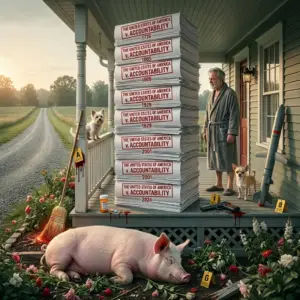
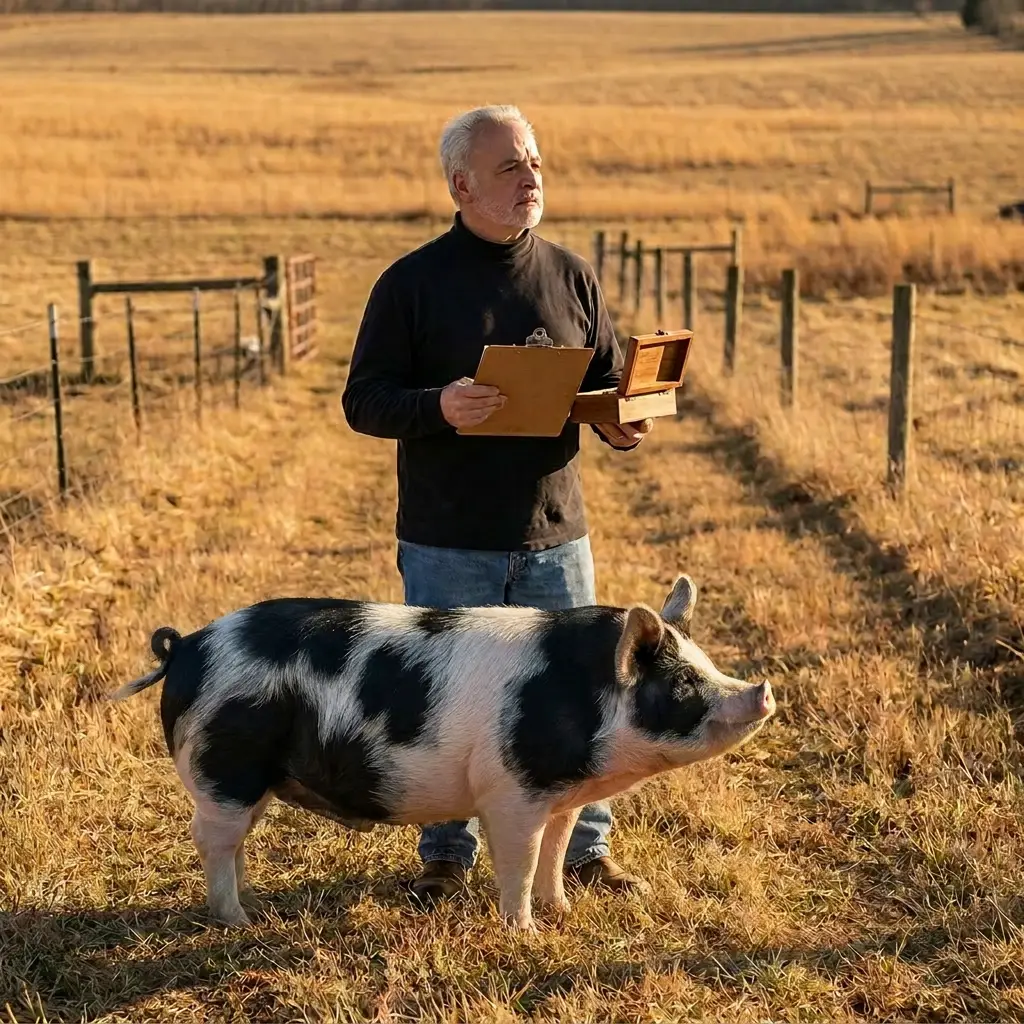
My wife read the Heter report and set down her coffee and said, “Why did we stop.” It was not a question. Trouble McFussbucket, our pig, was standing in the yard at the time and did not move for forty-five minutes afterward. I am choosing to interpret this as agreement.
The Case for Reinstatement
The Heter Proposal, as I am now calling it, rests on a simple principle: some things are in the wrong place, they know they are in the wrong place, everyone around them knows they are in the wrong place, and the most humane solution for all parties is a hinged box and an altitude of 150 to 200 meters. Heter understood this in 1948. We have forgotten it. I am here to remember it.
What follows is a targeted list of candidates for the modern program, compiled over several evenings on the farm, with editorial input from Trouble McFussbucket, who has strong opinions and a great deal of time in which to develop them.
The Animal Candidate
Nutria.
First, the name. Nutria. Say it out loud. Nutria. Say it again. Nutria. It sounds like something sold at Whole Foods in a matte black bag with a sans-serif font and a small explanatory paragraph on the back informing you that it is ancient, that it is powerful, that it has been used by Andean communities for centuries to support cellular regeneration, gut integrity, and what the label calls “whole-body harmonic alignment,” which is not a thing but which sounds like a thing if you read it in a store while holding a reusable tote bag. Nutria. Fuel your wild side. There would be a picture of a mountain on the bag. There is always a picture of a mountain on the bag. You would buy it. I would buy it. We would both buy it and mix it into a smoothie with oat milk and frozen mango and feel genuinely excellent about our choices for approximately eleven days before the bag migrated to the back of the cabinet behind the collagen peptides and the lion’s mane mushroom powder and the other bags we also stopped using, all of them judging us silently in the dark.
Nutria is not a supplement.
Nutria is a giant semi-aquatic rodent, native to South America, currently dismantling the wetlands of Louisiana one root system at a time with the focused, unhurried energy of something that has never once read a room. They weigh up to twenty pounds. They have orange teeth, a design choice that nature made and committed to fully, the way nature sometimes just decides something and refuses to discuss it further. The teeth are orange because of iron compounds in the enamel, which is the kind of fun fact that sounds made up but isn’t, which describes Nutria generally. They breed four times a year, producing litters of up to thirteen young per litter, which means that if you start with two Nutria and look away for eighteen months you will have what biologists call a “significant population event” and what Louisiana calls Tuesday.
They eat wetland vegetation by the root, which kills the plants entirely rather than just trimming them, which means they do not merely eat the pantry, they remove the pantry from the building. Coastal Louisiana has lost a landmass roughly the size of Delaware to erosion in the past century and Nutria have contributed to this in ways that are difficult to fully articulate without sitting down and breathing slowly for a moment.
Louisiana has tried everything. They tried bounties — paying trappers per tail, which produced a brief boom in the tail-removal industry and a predictable dip in the population that recovered immediately because four litters a year is not a vulnerability, it is a business model. They tried promotion, which is where things got interesting, because at some point someone in state government decided that the solution to an infestation of giant orange-toothed swamp rodents was to convince the public to eat them. There were recipes. There were cooking demonstrations. There was a campaign called Nutria for Supper which is either the most optimistic or the most defeated thing a government has ever printed on a brochure, and I have been unable to determine which.
The Heter box fits two. The parachutes are ready. We are simply waiting on the paperwork, which, given that it is Louisiana, may take some time.
The Human Candidate
The Y2K Caucus.
In 1999, the world became briefly and genuinely uncertain about what would happen when the calendar rolled from December 31st to January 1st and every computer on earth tried to process the year 2000 using two digits instead of four. This was a real concern. The people who raised it were not wrong to raise it. Enormous amounts of money were spent quietly fixing the problem, which is why the planes stayed in the air and the hospitals kept the lights on and your ATM did not dispense all of its money at once into the parking lot. The engineers who fixed it received no parades, which is how infrastructure always works — the disaster that doesn’t happen generates no headlines, and the people who prevented it go home and make dinner and watch something on television and are never thanked for any of it.
But there was another group. A group for whom Y2K was not a software problem to be solved but a prophecy to be prepared for, a sign pointing toward a larger and more permanent truth about the fragility of everything, a truth that had been trying to get their attention for years and had finally found the right vehicle. These were the people who built the bunkers. Who dehydrated the food. Who bought the generators and the shortwave radios and the water purification tablets and the many, many books about how to tan leather by hand, which is harder than it sounds and also not something most people need to do even in a genuine civilizational collapse but which felt important in October of 1999 in a way that is difficult to explain to someone who wasn’t there.
January 1st, 2000 arrived. The planes did not fall. The power stayed on. The water ran. The ATMs performed normally. And the people who had built the bunkers and dehydrated the food and learned to tan leather by hand did one of two things: they quietly repacked the emergency supplies into the garage and returned to their lives, slightly embarrassed and oddly relieved, or they did not do that at all. They looked at the evidence that nothing had happened and concluded that nothing happening was itself suspicious. They became more certain. They found other signs. They developed a relationship with impending catastrophe that turned out to be not a response to Y2K specifically but a personality trait that Y2K had simply been the first to discover, the way a good doctor identifies a condition that was always there and just hadn’t presented symptoms yet.
That personality trait has had a very full 25 years. It has rebranded several times. It has found new signs and new prophecies and new things that are definitely about to collapse, and it has been both more wrong and more confident with each passing year, which is a combination that would be impressive if it weren’t so exhausting for everyone in the vicinity.
The Heter Proposal, retroactively and with great affection, suggests the following.
In late 1999, we tell this group that Montana will be fine. Montana specifically. We say it with authority. We say it with charts. We find a guy who looks like a geologist and we put him in front of a map and he points at Montana with a long pointer and says the topography, the aquifer situation, and the general spiritual alignment of Montana make it uniquely positioned to weather whatever is coming, and everyone nods, and the pointer makes a very convincing sound when it taps the map. We encourage the group to relocate to Montana before the event. We help them pack. We are warm about it. We genuinely wish them well.
We do not specify which part of Montana. Montana is large. We are vague in the way of people who care deeply but are also very busy.
We fence Montana.
Not meanly. This cannot be stressed enough. The fence is good quality. It is the kind of fence that says we respect you and we also need this fence to be here. There is plenty of land inside the fence. There are rivers and forests and genuine natural beauty and a great deal of space in which to be certain about things without affecting the quarterly earnings reports of companies in other states. The bunkers they brought are legitimately useful in Montana, which has actual winters and actual weather and actual situations in which emergency preparedness is a practical virtue rather than a theological one. They will be, in many ways, happier. Montana will be, in some ways, more prepared. The fence will simply be there, doing what fences do, which is mark the edge of a thing.
We would not currently be having several of the conversations we are currently having as a country. To be specific, and we are going to be specific, because vagueness is what got us here: we catch them in 1999, before the personality fully metastasizes, before it finds its current branding, before it discovers that a red hat is load-bearing infrastructure. We catch them while they are still just people who are very worried about computers and have perhaps over-invested in freeze-dried beef stroganoff. We catch them at the larval stage. We catch them, we put them in Montana, we wish them well through the fence, and twenty-five years later we are a different country — one that is perhaps a little low on leather-tanners and shortwave radio operators, but which is also not currently arguing about whether the earth is a sphere, whether the election was real, whether vaccines contain a government, or whether the correct response to losing a democratic process is to bring a flagpole indoors to a federal building. We caught MAGA before it MAGA’d. We put it in a box. We attached a parachute. We pointed at Montana. We said you’re going to love it there. And we meant it, mostly, and the fence was good quality, and somewhere in the Bitterroot Valley a man in tactical gear is tanning leather by hand and genuinely thriving and has not affected a single congressional hearing. Everyone is fine. The fence is fine. Montana is fine. Montana was always going to be fine. That was the whole point of Montana.
Trouble reviewed this proposal by walking to the far corner of the property and sitting down heavily in the mud. She remained there for a long time. She did not appear conflicted. I am choosing to interpret her expression, to the extent that a pig’s expression can be interpreted, as the look of a creature who has dealt with enough fence-related politics of her own to understand that sometimes a fence is simply a fence.
The Conceptual Candidate
Daylight Saving Time.
Nobody knows why we still do this. I want to be precise about that. It is not that the reasons are bad. It is not that the reasons are controversial or contested or subject to reasonable disagreement among informed people. It is that the reasons do not exist. They existed once, arguably, in the way that many things existed once and then stopped existing when the circumstances that produced them changed, but we kept the thing anyway because we had already printed the calendars and nobody wanted to have the meeting.
The original justifications were agricultural, then industrial, then wartime. Farmers, it was said, needed the extra light. Farmers, it turns out, did not need the extra light and in fact found the clock change deeply inconvenient, because cows do not observe Daylight Saving Time and have never once adjusted their schedule because Congress said to, which is a form of civic participation I find admirable. The industrial justification was about coal, and the war justification was about the war, and the war ended in 1945, and here we are in 2025 still changing every clock in the house twice a year like we are performing a ritual whose original meaning has been lost but which we dare not abandon in case it turns out to have been holding something together.
What it costs us is not trivial. There is a measurable increase in heart attacks in the days following the spring change. There is a measurable increase in car accidents. Workplace injuries go up. Productivity goes down. Every study that has looked at this has found the same thing, which is that taking an hour of sleep away from several hundred million people simultaneously and then asking them to function normally the next morning produces outcomes roughly consistent with what you would expect if you asked a sleep researcher to design an experiment and told them the welfare of the participants was not a primary concern. We do this every year. We set the clocks forward and we lose the hour and we spend two weeks feeling like we are watching ourselves from slightly outside our bodies, and then we adjust, and then six months later we do it in the other direction, and the hour comes back, and for about four days everyone feels inexplicably wonderful, the way you feel wonderful when a headache stops, and then that wears off too and we go back to normal and nobody talks about it until March.
The farmers don’t need it. The energy savings don’t materialize. The children waiting for the school bus are standing in the dark either way, just a different dark depending on the season, which is not an improvement so much as a reassignment of darkness from one end of the day to the other, which is the kind of policy outcome that sounds like it was designed by someone who was very busy and did not read past the executive summary.
Drop zone: the sun. We pack it carefully, because we are professionals and the Heter Proposal is a humane program, and we make sure the box is well-constructed and the parachute is properly attached, and then we open the cargo door and we let it go, and we watch it fall toward the sun, and we close the cargo door, and we fly home, and in the spring we do nothing. We simply do nothing. The clocks stay where they are. The cows continue on their schedule. The children wait for the bus in whatever light there is, same as always, and nobody has a heart attack about it.
Trouble did not respond to this entry specifically. She was asleep in a patch of afternoon light that, thanks to the season, was falling at an angle she seemed to find acceptable. She had no notes. The light was where the light was. She was where she was. Some things, a pig understands instinctively, do not require adjustment.
A Final Note on Geronimo
Somewhere in the Frank Church-River of No Return Wilderness, a beaver (giggle) is building a dam. He does not know his name. He does not know that a man named Elmo dropped his great-great-great-grandfather out of a plane nine times before the grandfather finally gave up and climbed back into the box on his own. He does not know that the Forest Service filmed the whole thing, lost the film for sixty years, found it again, posted it to the internet, and that it has now been watched by several million people who use words like “iconic” and mean it without irony. He does not know that there was one beaver who jumped at 75 feet and made a decision that the historical record has chosen not to explain, and that this beaver is also part of his story, a cautionary ancestor who saw the ground coming and decided to take his chances, which is a thing that happens in every family if you go back far enough.
He is just building the dam. The stream is good. The meadow is quiet. Three or four generations of family occupy the surrounding territory, all of them descended from a beaver (giggle. giggle.) who was told he was going somewhere and went, and who then did what beavers do, which is exactly what they were brought there to do in the first place.
Elmo Heter filed his report, published it in the Journal of Wildlife Management in 1950, and moved on. The beavers stayed.
Some problems, it turns out, just need a box and a parachute and someone willing to pick you up when you land and point you in the right direction.
Trouble is standing at the gate facing the mailbox. She has been there since I started writing this. I have not asked why. I have learned not to ask why. The proposal is ready. Someone will mail it. These things have a way of getting where they’re going.

See my Amazon author page and buy my books.
His first manuscript was composed entirely of punctuation marks and confused sketches. He's since published "Not Bukowski" (poems that don't rhyme) and "Slop and Swell from a Festering Mind" (essays so concerning that bookstores check on his well-being). He once spent three hours photographing a rare bird that turned out to be a plastic bag, and he's the only person banned from church bake sales for "weaponized brownies." Inheriting absurdism from Vonnegut and Adams, sprawling narratives from Irving, and weaponized failure from Moore, he writes about conflicted everymen struggling through supernatural chaos.
He has two new, offbeat novels waiting for an agent or a publisher: "Truth Tastes Like Pennies" and "Elliot Nessie."
He remains unconvinced that birds aren't surveillance drones.
More biographic lies...err...info.
- Marrakech v. America - May 5, 2026
- They Parachuted the Beaver - May 5, 2026
- Red Eye Has Nothing to Fear - May 2, 2026