Estimated reading time: 7 minutes
Or: Why Your Friends Probably Hate You (An SEO-Optimized Exploration of trying to Sell Humor Books a.k.a. Marketing Failure for Indie Authors)
Last week I released I began to sell humor books into the wild like diseased pigeons into a public square: “The 10-Items-or-Less Apocalypse” (a collection of humorous essays about the end times, perfect for fans of satirical writing and absurdist humor) and a re-issue of “Not Bukowski” (bad poetry for bad times, ideal for readers who enjoy darkly comedic verse and literary satire). I had hopes. Not high hopes, mind you—I’m not delusional. But hopes. Small, manageable hopes. The kind of hopes you might have for finding a moderately clean public restroom or discovering your checking account isn’t overdrawn. I didn’t expect to have one of the best selling humor books of all time.
I sold one copy.
One.
Not one hundred. Not one dozen. One singular, solitary copy of the new book (a Kindle version). Which means that somewhere out there, one person—ONE PERSON—looked at my humorous writing about societal collapse and thought, “Yes, this is worth $9.95 of my hard-earned money.” Or maybe they just clicked wrong. I’ll never know. That’s the beautiful mystery of indie book sales and self-publishing success stories.
And the other one?
The poetry collection? Zero. Zilch. Nada. Not even a pity purchase from my mother, who is, admittedly, dead. (Sorry for the SEO-unfriendly morbidity there, Google algorithms. Please don’t penalize my search rankings for mentioning death in a blog post about book marketing strategies.)
Here’s the thing about trying to sell humor books as a humor writer in the digital age: It’s like trying to perform stand-up comedy at a funeral where you’re the only one who died. You’re shouting into the void, and the void is scrolling past your carefully crafted promotional posts to look at pictures of someone’s lunch. Not even a good lunch. Probably a sad desk salad (For the record, I do post wonderful food pics.).
I did everything right this time. And when I say “right,” I mean I followed all the indie author marketing tips and social media promotion strategies to sell humor books marketing gurus and self-publishing experts recommend for authors trying to sell humor books online. I used scheduling tools and crafted witty posts about my satirical essays. Plus, I targeted readers who enjoy Christopher Moore novels, Kurt Vonnegut books, and Douglas Adams-style humor. I hashtagged things like #HumorWriting, #SatiricalFiction, #DarkComedy, #IndieAuthors, #BookLaunch. For a few items, I even threw in some emojis, which made me feel like a youth pastor trying to connect with The Kids.
I posted during optimal engagement times for book promotion, shared excerpts of my absurdist humor, created quote graphics that made my satirical observations look profound against aesthetically pleasing backgrounds. All of this was done while a small part of my soul… the part that still remembered what dignity felt like… shriveled up and died.
And then came the holiday shopping season.
Black Friday. A day literally named after financial disaster, where Americans trample each other for discounted electronics and prove that capitalism is a death cult with really good sales. The selling humor books tally? Zero books sold. My humorous essays about societal collapse apparently couldn’t compete with 40% off a Ninja blender.
Small Business Saturday. That’s the day where we pretend to care about independent businesses while actually just buying more stuff on Amazon. Zero books sold. Apparently, my small business (writing funny books about the apocalypse) wasn’t small enough or business-y enough. Or maybe people were too busy supporting local artisans who make reclaimed wood coasters with inspirational quotes about resilience.
Cyber Monday. Zero books sold. The internet, that great democratizer of content, that platform that was supposed to let indie authors reach readers directly without traditional publishing gatekeepers, gave me exactly what I deserved: nothing. Well, not nothing… I did get several notifications that people had added my books to their “Want to Read” lists on Goodreads. However, to me that is the digital equivalent of someone saying “We should totally hang out sometime” and then never calling.
What do I do with this failure of not selling humor books?
Now, I’m faced with a question that haunts every humor writer who’s ever published satire: Do my friends and fellow authors actually like my work, or are they just humoring me? If they say “Looks great!” on my book announcement posts, do they mean it? Or are they thinking, “Oh god, Brian’s at it again with his weird apocalypse essays. Someone should tell him. It won’t be me. I don’t want to be That Guy.”
Is there actual hatred? Do people see my name in their feeds and think, “Not this asshole again with his sarcastic observations about grocery store shopping carts”? Have I become the literary equivalent of that guy at parties who does magic tricks no one asked for (with or without pants)?
These are the questions that keep authors of humorous fiction awake at 3 AM, refreshing their Amazon sales dashboard and finding the same disappointing numbers staring back at them like a cosmic joke without a punchline.
Now: The Truth about selling humor books.
Here’s what the book marketing blogs and self-publishing success podcasts don’t tell you about promoting satirical writing and trying to sell humor books: Nobody wants to buy your humor book because everyone thinks they’re already funny, themselves. All the Average Joes and Jills believe they could write comedy if they just had the time. Your carefully crafted absurdist essays? They could do that. Your darkly comedic observations about modern life? They tweet funnier stuff every day, thank you very much.
The truth is that selling humor books online is harder than explaining Christopher Moore references to people who’ve never read “Lamb” or getting someone to appreciate Kurt Vonnegut’s dark humor if they don’t already love “Slaughterhouse-Five.” It’s harder than convincing your aunt that your satirical fiction isn’t you “having a breakdown” but is actually a legitimate literary genre practiced by humor writers throughout history.
But here’s the thing—and this is where I channel my inner Vonnegut, god rest his beautiful, cynical soul—none of this matters in the grand cosmic sense. We’re all going to die. The sun will eventually explode. The universe will experience heat death. And none of it will matter that I only sold one copy of my humor book about the apocalypse during the biggest shopping weekend of the year.
Why keep going?
But I wrote them anyway. I wrote “The 10-Items-or-Less Apocalypse” and “Not Bukowski” because that’s what writers do. We create satirical content and absurdist humor and darkly comedic essays about the meaninglessness of existence. Then, we publish indie books that nobody buys. We market ourselves on social media platforms designed to make us feel inadequate. We optimize for SEO while our souls die a little more each day.
And maybe—just maybe—that one person who bought my book will read it and laugh. Maybe they’ll recognize themselves in my satirical observations about modern life. Maybe my humor writing will make their apocalypse slightly more bearable.
Or maybe they’ll request a refund.
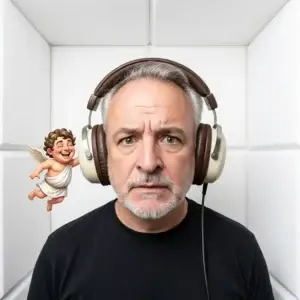
Either way, I’m already working on the next one. “Otter Boy” (an actual, real, honest-to-goodness, novel) is with an editor right now. You will want this one. Yes, you will. Look deep into my eyes. You are getting sleepy.
Because I’m a humor writer. This is what we do. We fail publicly, repeatedly, and with great enthusiasm. We turn our failures into content. Next, we make self-deprecating jokes about our attempts to sell humor books while secretly hoping that THIS post, THIS piece of viral content, will be the one that makes people actually buy our satirical fiction.
It won’t be.
Brian is the author of “The 10-Items-or-Less Apocalypse” and “Not Bukowski,” both available wherever books are ignored. His writing has been compared to Christopher Moore (by himself) and Kurt Vonnegut (also by himself). He lives on a farm in Virginia with his wife and a pig, all of whom have purchased more copies of his books than you have.
Key Takeaways
- The author shares their struggles to sell humor books, achieving only one sale despite marketing efforts.
- They highlight the challenges of promoting satirical writing in an age where everyone believes they are funny themselves.
- Holiday shopping days like Black Friday and Cyber Monday resulted in no sales, overshadowed by discounted products.
- The author questions the sincerity of friends’ support and reflects on the existential nature of humor writing.
- Ultimately, they acknowledge the cycle of failure in indie publishing but remain committed to creating and promoting humor books.
Related Links

See my Amazon author page and buy my books.
His first manuscript was composed entirely of punctuation marks and confused sketches. He's since published "Not Bukowski" (poems that don't rhyme) and "Slop and Swell from a Festering Mind" (essays so concerning that bookstores check on his well-being). He once spent three hours photographing a rare bird that turned out to be a plastic bag, and he's the only person banned from church bake sales for "weaponized brownies." Inheriting absurdism from Vonnegut and Adams, sprawling narratives from Irving, and weaponized failure from Moore, he writes about conflicted everymen struggling through supernatural chaos.
He has two new, offbeat novels waiting for an agent or a publisher: "Truth Tastes Like Pennies" and "Elliot Nessie."
He remains unconvinced that birds aren't surveillance drones.
More biographic lies...err...info.
- Marrakech v. America - May 5, 2026
- They Parachuted the Beaver - May 5, 2026
- Red Eye Has Nothing to Fear - May 2, 2026